What to see in Sitges on foot
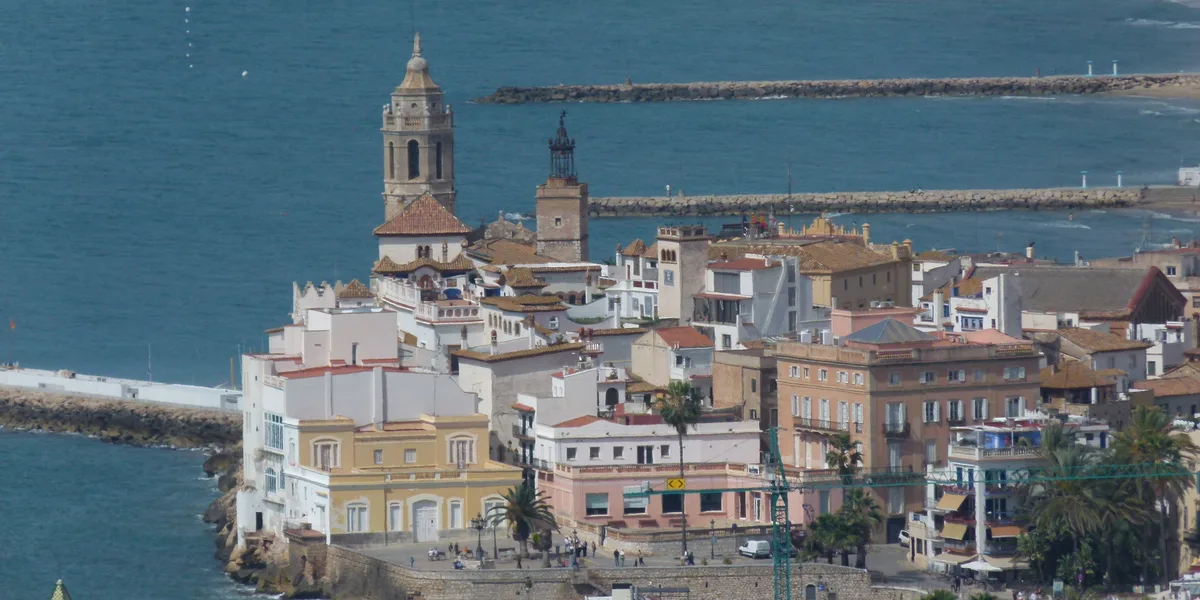
Sitges is known for the outline of the church of Sant Bartomeu i Santa Tecla above the sea. The painter Santiago Rusiñol set up his studio here at the end of the 19th century, and since 1968 the town has hosted a fantasy film festival that was the first in the world devoted to the genre.
What to see
Iglesia de Sant Bartomeu i Santa Tecla
The church whose outline is photographed from the seafront promenade. Beneath it lie the remains of two earlier churches.
Museu Cau Ferrat
A former fisherman's house that Santiago Rusiñol made into his studio in 1893-1894. He had two El Greco canvases carried to it in a public procession through the town.
Casa Bacardí
It remembers Facundo Bacardí, founder of the rum brand bearing his surname, who was born in Sitges in 1813 and left for Cuba at fifteen.
Palau de Maricel
A seafront palace that the Chicago millionaire Charles Deering built in 1910, after buying several fishermen's houses and the old medieval hospital on the headland.
Plaça del Baluard (la Punta)
A lookout facing the church above the sea, the town's postcard view. Before it was a viewpoint it was a military fortification.
Ajuntament de Sitges
An 1889 town hall built over the foundations of the medieval castle from which Sitges grew. Every Carnival, the Rey Carnestoltes is mocked from its balcony.
Carrer de Fonollar
A narrow old-town street named after Bernat de Fonollar, the nobleman who governed Sitges in the 14th century and founded a hospital for its people.
Carrer del Pecat (Primer de Maig de 1838)
Its official name refers to an 1838 Carlist battle, but it is known as the street of Sin and is the centre of the town's nightlife.
Casino Prado
A theatre with red velvet seats that has screened the Sitges Film Festival since 1968, the first festival in the world devoted to fantasy film.
Cementiri de Sant Sebastià
A seaside cemetery opened in 1814. It holds some of the most elaborate Modernista tombs in Catalonia, paid for by indianos who returned wealthy from Cuba.
Museu Romàntic (Can Llopis)
An 18th- and 19th-century mansion that shows how a well-off Sitges family lived. It also has a collection of antique dolls.
Platja de Sant Sebastià
The town's most family-oriented, local beach. A 2013 ranking in The New York Times put it top among Europe's city beaches, above Saint-Tropez, Ibiza and Capri.
How much time you need
With the Citourfy audio guide, the walk around Sitges takes about 56 min and covers 2.7 km. If you go inside museums or churches, add the time for each visit.
Getting to the starting point
- Starts right by Estació de Sitges (Renfe) · Rodalies R2 Sud.
When to go: festivals
Local festivals, in case you want your visit to coincide with one:
- Festival Internacional de Cinema Fantàstic de Sitges · October
For eleven days in October the town is given over to fantasy and horror cinema, with premieres and red carpets.
- Festa Major de Sant Bartomeu · August
In late August, about 36 hours of diables, correfoc, castells and fireworks in honour of the patron saints.
Sitges audio guide
The app narrates each place as soon as you arrive, using your phone's GPS:
- Sitges on Foot: Indianos, Painters, and the Sea · 56 min · €1.99


Sources
The facts in this guide come from the same records as the audio guide and from these public inventories:
- es.wikipedia.org/wiki/Iglesia_de_San_Bartolomé_y_Santa_Tecla
- es.wikipedia.org/wiki/Museo_Cau_Ferrat
- es.wikipedia.org/wiki/Palau_de_Maricel
- ca.wikipedia.org/wiki/Casa_de_la_Vila_de_Sitges
- ca.wikipedia.org/wiki/Casino_Prado_Suburense
- ca.wikipedia.org/wiki/Cementiri_de_Sitges
- es.wikipedia.org/wiki/Museo_Romántico_Can_Llopis
- ca.wikipedia.org/wiki/Platja_de_Sant_Sebastià_(Sitges)
Facts checked on October 22, 2026.