What to see in Figueres on foot
Figueres grew up as a crossroads and a trading town, and has been a royal town since 1267. Salvador Dalí was born, baptised and buried here, and the city keeps his theatre-museum, the tower where he lived and the house where he was born. It also has Sant Ferran Castle, an 18th-century fortress that is the largest monument in Catalonia by size.
What to see
Teatre-Museu Dalí
A former theatre from 1850, gutted by fire in 1939, which Dalí turned into his museum and crowned with a geodesic dome over the stage. The painter is buried inside.
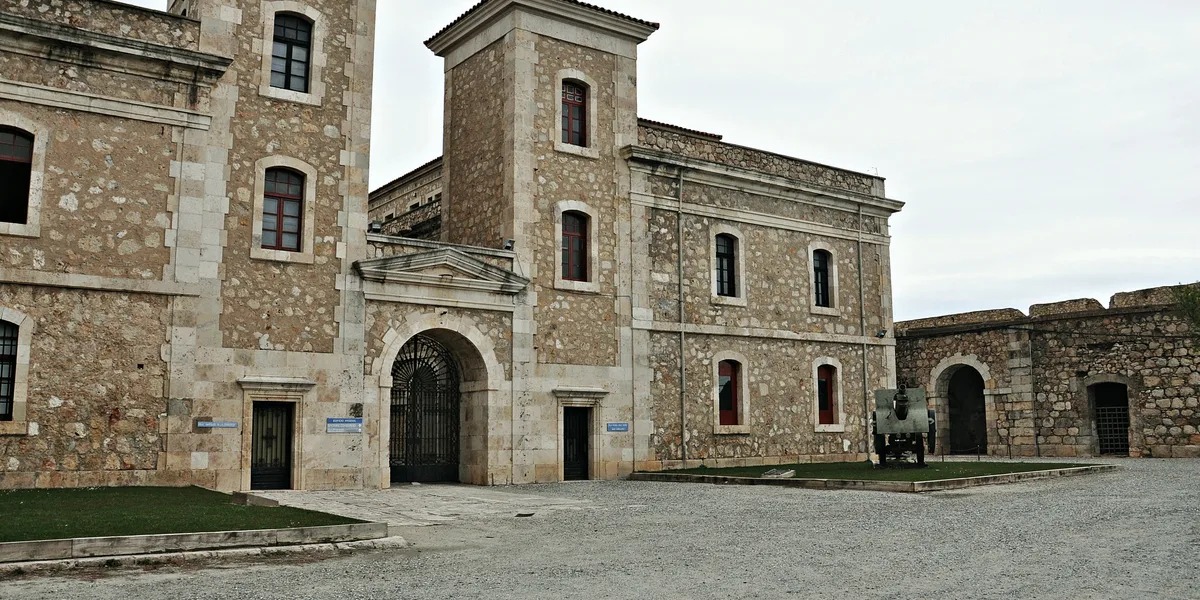
Castell de Sant Ferran
An 18th-century Neoclassical fortress, the largest monument in Catalonia by its dimensions. It had stabling for 450 horses, and the Republican Cortes held their final session here.
Església parroquial de Sant Pere
A church recorded since 1020, Gothic with historicist additions. Philip V married here and Salvador Dalí was christened here; the large rose window on the façade and the octagonal bell tower stand out.
La Rambla de Figueres
A promenade laid over the Galligans stream, which ran at the foot of the town wall and was covered over in 1832. The plane trees went in in 1862 and the Rambla became the town's drawing room, with Noucentista work from the early 20th century.
Torre Galatea (Torre Gorgot)
The only survivor of the fourteen towers in Figueres's town wall. Dalí decorated it with giant eggs and loaves, named it after Gala and lived in it until he died.
Monument a Narcís Monturiol
A Noucentista monument in white stone, with flying fish and a figure of Fame holding laurel, honouring the inventor of the submarine. It was agreed in 1892 and unveiled in 1918.
Casa natal de Dalí
The Modernista house on Carrer Monturiol where Salvador Dalí was born in 1904. His father kept his notary's office on the ground floor.
Casino Menestral Figuerenc
The society of Figueres's tradespeople, founded in 1856, with a Modernista headquarters from 1904 by Josep Bori: a corner building with a tower and blue-and-white trencadís domes. It keeps a Golden Book with illustrious signatures.
Mercat Municipal de Figueres
The market of a town that has lived from trade and from being a crossroads. Figueres still holds a weekly market on Thursdays and a Santa Creu fair dating back to 1419.
Plaça de l'Ajuntament
The old heart of Figueres, where the roads to Girona, La Jonquera, Besalú and Peralada met. The town has been royal since 1267, and the square has had arcades since 1819.
Ajuntament de Figueres (Casa Consistorial)
A town hall in monumental academic style. It was built after its predecessor was declared unsafe in 1926, paid for with a 1933 loan and completed in June 1937, during the Civil War.
Antic Escorxador municipal
A former Modernista slaughterhouse from the early 20th century, designed by Josep Azemar. Local residents campaigned to prevent its demolition, and it now holds the Arxiu Comarcal de l'Alt Empordà.
How much time you need
Citourfy has 2 walking tours in Figueres, 1h 4min to 1h 10min each: each area can be done on its own, on different days or on the same one.
Getting to the starting point
- Dalí: Starts a 1-minute walk from Estació de Figueres (Rodalies).
- Historic Figueres + Castell de Sant Ferran: Starts a 1-minute walk from Estació d'autobusos de Figueres.
When to go: festivals
Local festivals, in case you want your visit to coincide with one:
- Fires de l'1 de Maig de Figueres · May
On 1 May, the Rambla and the central squares fill with stalls of second-hand goods, collectables, drawings and crafts.
- Festa Major de Sant Pere de Figueres · June
Around 29 June, the feast of Sant Pere brings concerts, open museums, bell-ringing and organ music.
Figueres audio guide
The app narrates each place as soon as you arrive, using your phone's GPS:
- Dalí · 1h 4min · €1.99
- Historic Figueres + Castell de Sant Ferran · 1h 10min · €1.99


Sources
The facts in this guide come from the same records as the audio guide and from these public inventories:
Facts checked on October 22, 2026.